Jodhpur Travel Guide: Mehrangarh and the Blue City
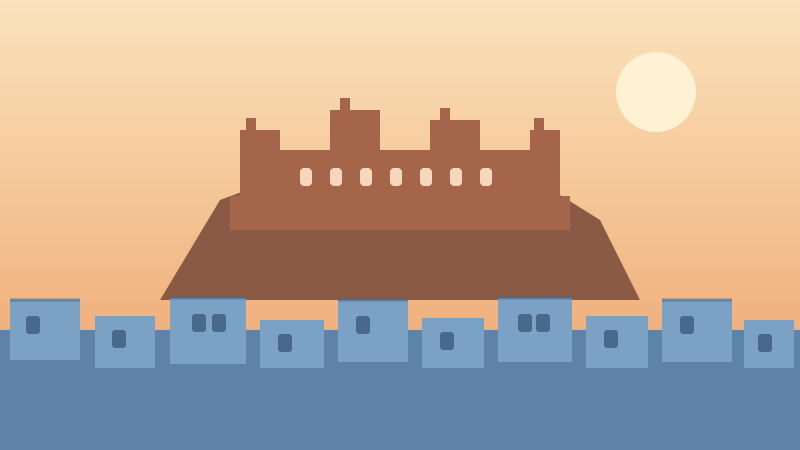
If you only climb one fort in Rajasthan, make it Mehrangarh. Rudyard Kipling called it the work of giants, and from the old city 120 metres below it’s hard to argue — sheer walls growing straight out of the rock, with the indigo-washed lanes of the Blue City pooled at its feet. Jodhpur is compact: one intense day covers it, two lets it breathe.
Mehrangarh: the best-run fort in the state
Mehrangarh isn’t just the most dramatic fort in Rajasthan — it’s the best curated, run by a trust that takes museums seriously. The palace interiors (Phool Mahal, the palanquin and howdah galleries, the cradle room) are genuinely worth the audio guide, which is included with entry and excellent.
Go early or late — the fort faces the day’s heat with stone honesty. Two extras worth the add-on: the zip-line circuit over the ramparts and desert rock (surprisingly good, and the views are the point), and the walk down through the old gates, spotting the cannonball scars on Loha Pol.
Below the fort, white-marbled Jaswant Thada — the royal cenotaphs — is a peaceful twenty minutes with the best fort-profile photo in town.
The Blue City
The indigo lanes of Navchokiya / Chandpol are the Jodhpur of photographs. Why blue? Pick your theory — Brahmin tradition, insect-repelling lime, heat reflection — locals cite all three. The truth of walking it: get lost deliberately, morning light, accept the tea invitations, and ask before photographing doorsteps that are, after all, homes.
Toorji ka Jhalra and the new old town
The 18th-century stepwell at Toorji ka Jhalra has become the anchor of Jodhpur’s most pleasant quarter — restored geometry of red sandstone steps, ringed by cafés and boutique stays. Come at golden hour, drink something cold, and watch local kids turn the monument into a diving pool.
Sardar Market and the clock tower
Jodhpur’s commercial heart since the 1880s: spice pyramids, bangle lanes, saree stalls, and the famous makhaniya lassi thick enough to require a spoon. It’s a market that still mostly serves locals — the best kind. Evening is peak theatre.
Umaid Bhawan
The last great palace built in India (finished 1943, Art Deco throughout) is part royal residence, part luxury hotel, part small museum. The museum wing is a quick visit and mainly for architecture and classic-car fans — go if the sandstone dome has been staring at you all day and you need to know.
How many days?
One full day covers fort + Jaswant Thada + stepwell + market. A second day adds the Blue City walk at the right pace, Umaid Bhawan, and an unhurried evening — worth it if your route allows. Jodhpur’s real role in most trips is the hinge between Jaisalmer and Udaipur: see the 7-day and 10-day routes.
Where to stay
Sleep in the old city if atmosphere matters: guesthouse rooftops under the floodlit fort are Jodhpur’s signature evening. The Toorji ka Jhalra quarter balances character with comfort best; heritage havelis around Fort Road run from budget to boutique.
Getting there
Well-connected airport (Delhi, Mumbai) and solid rail links — including the 5–6 hour line to Jaisalmer and overnight options to Delhi. By road: Jaipur ~6 hours, Udaipur 4.5–5 via the worthwhile Ranakpur detour, Jaisalmer ~5.