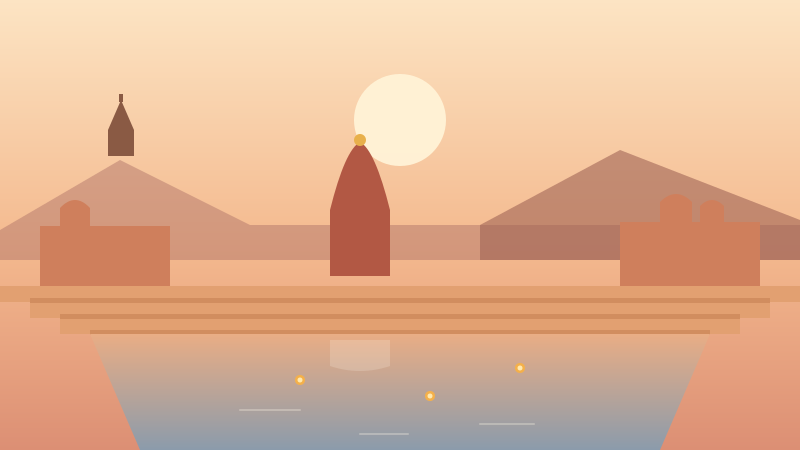
Pushkar Travel Guide: Lake, Temple & Camel Fair
Pushkar is two towns sharing one small lake. The first is among Hinduism’s holiest places — 52 bathing ghats around water said to have sprung where Brahma dropped a lotus, and one of the world’s very few temples dedicated to Brahma himself. The second is a backpacker bazaar of rooftop cafés, falafel, and shopping. The mix is odd and oddly charming — and it’s an easy 2.5–3 hour hop from Jaipur that breaks the drive west perfectly.
The lake and the ghats
Everything radiates from the water. Walk the ghat circuit at dawn or dusk — bells, pigeons wheeling, pilgrims immersing — and observe the basics: shoes off near the ghats, no photos of bathers, and calm refusal of unsolicited “pushkar passport” flower-priests (if you want a blessing ceremony, agree the donation first; if not, a polite folded-hands namaste and walking on works fine).
Brahma Temple
Modest in size, immense in rarity — Hindu tradition holds that a curse limits Brahma’s temples, making this red-spired 14th-century shrine the most important of the very few that exist. Queues move fast; mornings are calmest. No phones or cameras inside.
The viewpoint climbs
Two hilltop temples bracket the lake: Savitri Mata (southwest, the longer climb or a short ropeway ride) and Papmochani (Gayatri) to the northeast. Savitri at sunrise is the classic — the lake, the town, and the desert edge laid out in morning gold. Carry water; the steps mean business.
The bazaar
Pushkar’s main street is one long, likeable shopping crawl: leather bags, silver, mirror-work textiles, secondhand books in eight languages. Prices start optimistic; bargaining is expected and friendly. The café rooftops along the lake’s north side do sunset better than anywhere — note that out of respect for the town’s sanctity, Pushkar is vegetarian and alcohol-free by rule (some menus interpret “special lassi” creatively; know what you’re ordering).
The Camel Fair
For one week around Kartik Purnima (usually November), several hundred thousand people and tens of thousands of camels, horses and cattle turn the desert edge into Rajasthan’s greatest spectacle — trading mornings, race afternoons, ferris-wheel nights. It is genuinely unmissable and genuinely overwhelming: rooms triple in price and sell out months out. Decide early which Pushkar you want — fair-week theatre or off-week serenity. Both are valid; they are different trips.
How long, and where it fits
One night does Pushkar justice; two suit the unhurried. The standard play is Jaipur → Pushkar (afternoon + evening ghats, next-morning temple and hill climb) → onward to Jodhpur — exactly how our 7-day route uses it. Nearby Ajmer (30–40 minutes) holds the great Sufi shrine of Khwaja Moinuddin Chishti — a worthwhile half-day for those drawn to it, and the region’s main rail junction.
Where to stay
Guesthouses with lake-facing rooftops are the point — the north and east ghats have the pick. During the fair, tented camps bloom on the fairgrounds; elsewhere in the year, a heritage haveli near the bazaar keeps everything in walking range.